The Delhi High Court has upheld the Food Safety and Standards Authority of India’s (FSSAI) ban on the use of the term “ORS” (Oral Rehydration Salts) on beverages and packaged drinks that do not comply with World Health Organization (WHO) standards for medical oral rehydration solutions. The court ruled that allowing regular hydration drinks or …
Delhi High Court Upholds FSSAI Ban on Use of ‘ORS’ for Non-Medical Beverages
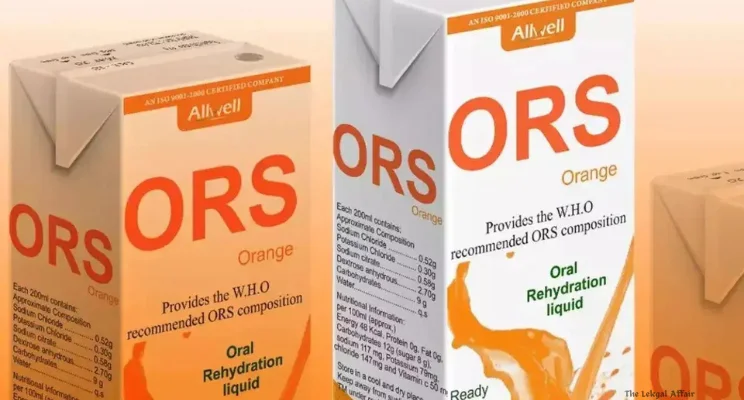
The Delhi High Court has upheld the Food Safety and Standards Authority of India’s (FSSAI) ban on the use of the term “ORS” (Oral Rehydration Salts) on beverages and packaged drinks that do not comply with World Health Organization (WHO) standards for medical oral rehydration solutions.
The court ruled that allowing regular hydration drinks or sugar–salt beverages to use the term “ORS” could mislead consumers into believing they are purchasing a clinically approved rehydration therapy, which is medically prescribed in cases of dehydration caused by diarrhea, illness, or heat-related conditions.
ORS Is a Medical Product — Not a Marketing Descriptor
In its judgment, the court clearly stated that:
- ORS is a therapeutic formulation
- It has a defined WHO-approved composition
- It is intended for medical use under established clinical guidelines
Using the term casually on food or beverage products, the court observed, blurs the distinction between medical treatment and general hydration, potentially putting public health at risk.
The court fully agreed with FSSAI’s position that only products meeting exact medical standards should be allowed to carry the ORS label.
What Qualifies as Genuine ORS?
Under WHO norms, medical ORS must contain:
- Precisely regulated sodium levels
- Glucose in defined proportions
- Potassium, chloride, and citrate
- Specific osmolarity thresholds
This formulation is scientifically designed to restore electrolyte balance and prevent dehydration-related complications.
Beverages that merely contain sugar, salt, or electrolytes do not qualify as ORS unless they strictly meet these specifications.
Why the Court Supported the Ban
The High Court noted that misuse of the ORS label:
- Misleads consumers into equating beverages with medical therapy
- Encourages incorrect self-treatment
- Risks under-treatment of dehydration, especially in vulnerable groups
- Undermines public health safeguards
This concern is particularly relevant in rural and low-income communities, where ORS is widely relied upon as a life-saving medical intervention.
Impact on Beverage and Nutrition Brands
The ruling directly impacts:
- Electrolyte and hydration drink brands
- Energy and sports beverage manufacturers
- Nutraceutical and wellness companies
- E-commerce sellers of packaged beverages
Brands currently using terms such as “ORS,” “ORS-based,” or “ORS-like” without WHO compliance must:
- Change product labeling
- Withdraw or correct misleading packaging
- Update advertising and digital listings
- Ensure full regulatory alignment
Non-compliance may lead to penalties, seizures, and marketing restrictions under the Food Safety and Standards Act, 2006.
Why This Matters for Consumers
ORS is a critical medical product in India, particularly for:
- Children
- Elderly patients
- Individuals suffering from diarrhea or dehydration
Confusing medical ORS with regular hydration drinks can delay proper treatment and worsen health outcomes. The court reinforced that consumer protection and public health take precedence over marketing claims.
Part of FSSAI’s Wider Crackdown on Misleading Claims
The ruling aligns with FSSAI’s broader enforcement push against:
- Misuse of medical terminology
- Exaggerated health and nutrition claims
- Incorrect product identity labeling
It follows recent regulatory actions involving tea classification, nutrition disclosures, and misleading wellness marketing.
Legal Significance
The decision reinforces:
- Section 24 of the Food Safety and Standards Act
- Mandatory clarity on product identity and purpose
- The principle that medical terms cannot be used as generic descriptors
The court emphasized that regulatory definitions are not flexible branding tools.
Key Takeaways
- Delhi High Court upholds FSSAI ban on misuse of “ORS”
- Only WHO-compliant medical products may use the term
- Hydration beverages must revise labels and advertising
- Consumer protection and public health are paramount
- Misleading medical claims invite strict enforcement
Conclusion
The Delhi High Court’s ruling delivers a strong message to the food and beverage industry: medical terminology must be used responsibly, accurately, and within regulatory boundaries.
By preventing the misuse of the term “ORS,” the court has reinforced public trust, reduced consumer confusion, and strengthened India’s food labeling framework.
For beverage brands, the takeaway is clear — scientific accuracy and regulatory compliance are no longer optional; they are essential.