Central kitchens in institutional foodservice are rapidly transforming how large-scale meal programs operate across India. As contract caterers serve hospitals, corporate offices, educational campuses, manufacturing plants and large facilities, the industry is shifting decisively toward hub-and-spoke production models focused on efficiency, consistency, and compliance. Under this structure, meals are prepared in large, professionally designed central …
Central Kitchens in Institutional Foodservice Are Becoming the New Backbone
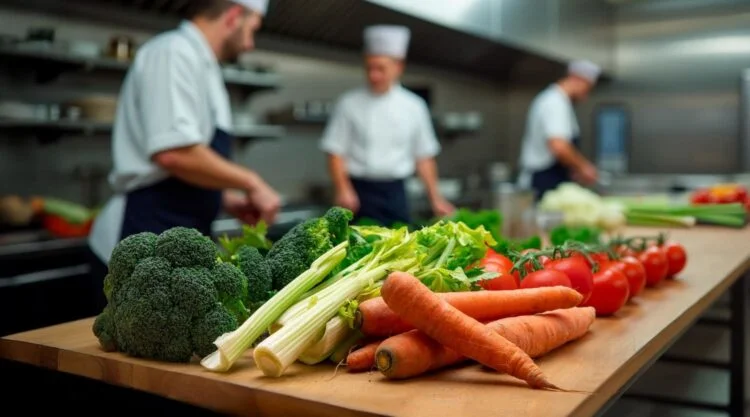
Central kitchens in institutional foodservice are rapidly transforming how large-scale meal programs operate across India. As contract caterers serve hospitals, corporate offices, educational campuses, manufacturing plants and large facilities, the industry is shifting decisively toward hub-and-spoke production models focused on efficiency, consistency, and compliance.
Under this structure, meals are prepared in large, professionally designed central kitchens and distributed to multiple service locations. Leading institutional caterers say the model enables tighter operational control, uniform quality, and scalable delivery across high-volume meal programs.
Why Central Kitchens Are Gaining Strategic Importance
Institutional foodservice operators often manage tens of thousands of meals daily, making standardisation critical. Central kitchens in institutional foodservice offer several operational advantages:
- consistent taste and nutrition across multiple locations
- lower food wastage through centralised planning
- reduced manpower duplication
- stronger hygiene monitoring
- easier implementation of Food Safety Management Systems
- improved procurement leverage with suppliers
Rising scrutiny around food safety and compliance has further accelerated investment in professionally equipped central facilities featuring temperature-controlled storage, segregated preparation zones, and end-to-end traceability systems.
Technology Becomes Core to Central Kitchen Operations
Modern central kitchens in institutional foodservice are increasingly technology-driven. Operators are deploying:
- automated cooking and batch processing equipment
- digital inventory and procurement systems
- cold-chain temperature monitoring
- recipe standardisation and nutrition software
- real-time quality audit dashboards
These tools reduce operational variability and improve compliance transparency—especially for multinational corporate clients and healthcare institutions with strict audit requirements.
Corporate and Healthcare Segments Lead Adoption
The fastest adoption of central kitchens in institutional foodservice is occurring across:
- large corporate parks
- IT and technology campuses
- industrial manufacturing clusters
- chain hospitals
- educational institutions
In healthcare, precision nutrition is non-negotiable. Central kitchens enable accurate preparation of diet-specific meals—such as diabetic-friendly, low-sodium and recovery-focused menus—through segregated handling and controlled cooking processes.
Investments Scale Up Across Major Cities
Institutional caterers are expanding central kitchen capacity across both metro and tier-II markets, including:
- Bengaluru
- Hyderabad
- Pune
- Chennai
- Ahmedabad
- Gurugram
- Kochi
Facilities typically range from 10,000 to 40,000 square feet, supporting multiple delivery routes and satellite service counters across a region. These investments reflect confidence in long-term demand from organised workplaces and healthcare infrastructure.
Food Safety Audits Drive Industry Professionalisation
Institutional clients now demand:
- certified hygiene and sanitation systems
- strict allergen management
- documented sourcing protocols
- regular testing and audit trails
Central kitchens in institutional foodservice help caterers consistently clear audits conducted by corporate compliance teams, healthcare regulators, and multinational procurement departments. This shift is favouring organised, scale-driven operators over fragmented local vendors.
Workforce Training and Retention Improve
Centralisation also simplifies workforce development. Operators can:
- run structured hygiene and safety training
- deploy supervisory chefs effectively
- provide equipment-specific skill development
- establish clear roles and career progression paths
This improves staff retention and supports long-term professionalisation of kitchen employment.
Logistics Remains the Key Operational Challenge
Despite its advantages, the success of central kitchens in institutional foodservice depends heavily on logistics. Critical requirements include:
- insulated and temperature-controlled delivery vehicles
- GPS-enabled route optimisation
- cold-chain reliability
- strict on-time delivery schedules
Meal-time punctuality is essential for hospitals and workplaces, prompting operators to invest heavily in fleet infrastructure and dedicated logistics coordination teams.
Financial Impact and Industry Outlook
Industry analysts note that central kitchens in institutional foodservice:
- reduce per-meal production costs
- improve procurement margins
- stabilise brand and quality perception
- enable rapid geographic scale
With India’s organised corporate, healthcare and education sectors expanding steadily, centralised production kitchens are expected to become the operational backbone of institutional catering over the next five years.
Future investments are likely to focus on:
- automation and robotics
- nutrition science integration
- data-driven menu planning
- advanced compliance and audit systems
This evolution is transforming institutional meals from a basic service into a managed, quality-assured hospitality function.
🔑 Key Takeaways
- Central kitchens support scale, cost efficiency and quality control
- Institutional caterers are rapidly adopting hub-and-spoke models
- Technology and audit readiness are accelerating the shift
- Healthcare and corporate foodservice lead adoption
- Logistics and cold-chain reliability remain mission-critical